
Harley Street
Harley Street, Westminster
London’s premier address for private doctors, Harley Street runs northwards from Cavendish Square to Regent’s Park along what was once the valley of the Tyburn river
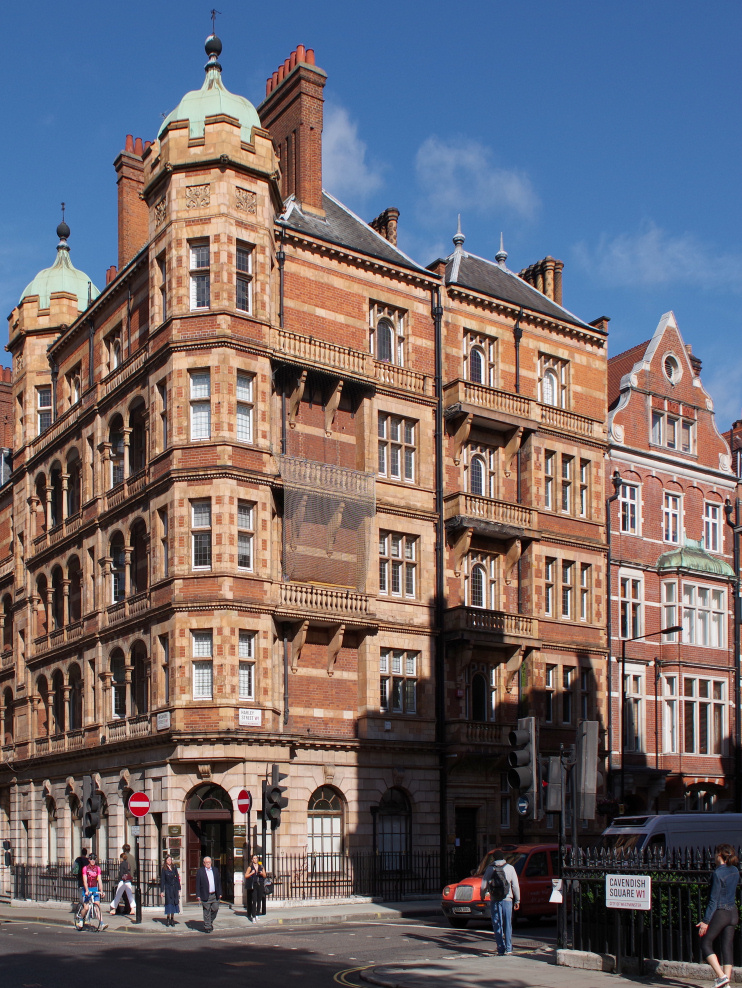
From around 1719 Edward Harley, later second Earl of Oxford, began to develop the Cavendish family estate, but Harley Street itself was not completed until 1770. Its architecture was widely scorned for its dullness but the sumptuous interiors, some by the Adam brothers, attracted the upper echelons of society, including Lady Nelson, JMW Turner and William Gladstone.
The Duke of Wellington (as he later became) rented a home in Harley Street for his wife and children while he was away on his military campaigns. Foreign ambassadors chose the street for its quietness and the quality of its homes, and families from the country rented here during the London season.
Around the mid-19th century Cavendish Square became a prestigious location for physicians’ consulting rooms and doctors began to colonise the southern end of Harley Street in order to be near the square. Florence Nightingale moved to Harley Street in 1853 to become superintendent of a gentlewomen’s nursing home.
It was not until later in the 19th century that Harley Street acquired a cachet of its own, whereupon spacious rooms were subdivided into consulting suites and large brass plaques were mounted on front doors, because professional restrictions prevented other forms of advertising. By the 1920s the street had almost completely filled up with doctors and Brunswick Place was renamed Upper Harley Street to provide additional capacity.
Harley Street lost some of its practices after the creation of the National Health Service, but it remains synonymous with expensive consultancy, including newer forms of treatment such as cosmetic surgery.
In Elizabeth Gaskell’s North and South, heroine Margaret Hale lives in ‘comfort and luxury’ with her cousin Edith Shaw at 96 Harley Street, while Charles Dickens made the street home to the obscenely wealthy Mr Merdle in Little Dorrit. Both novels were published in the 1850s.
Postal district: W1
Further reading: Percy Flemming, Harley Street: From Earliest Times to the Present Day, Lewis, 1939