
South Acton
South Acton, Ealing
Historically, the most deprived part of the Acton sprawl, dominated – until recently – by the post-war South Acton estate
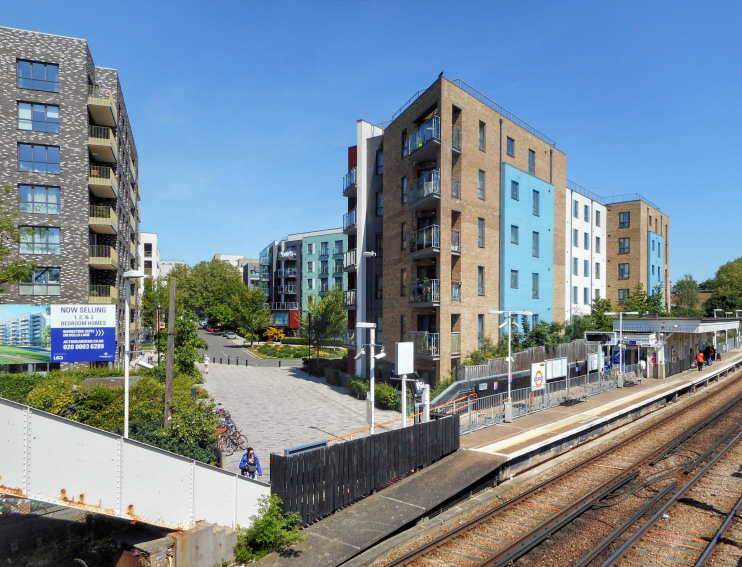
South Acton was farmland until the 1859 enclosure award but thereafter began one of the most intensive phases of development seen in the London area at that time. The British Land Company acquired several fields and laid out a network of terraced streets. Thousands of new Londoners arrived from all over the British Isles in search of a job and an affordable home. Many men were employed as labourers in nearby brickfields while their wives worked in Acton’s burgeoning laundry industry, either for one of the larger concerns of ‘Soapsuds Island’ or taking in washing at home.
South Acton gained a railway station in 1880, on what is now the London Overground’s North London line, and a tube station in 1905, on a short spur line from Acton Town. By this time the settlement had a population of 15,000, many of whom were living in increasingly overcrowded surroundings. Conditions barely improved throughout the first half of the 20th century.
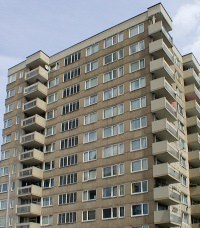
It was not until after the Second World War that the municipal authorities acted to clear the slums. The council compulsorily purchased all the properties on streets that lay immediately north of South Acton station and began to replace these with blocks of flats, the first of which were completed by 1954. South Acton tube station closed in 1959. More blocks of flats went up in the early 1960s, including two of 22 storeys.
Begun in 2012, a 15-year scheme is replacing the South Acton estate with an ‘urban village’ called Acton Gardens, created by a partnership between L&Q Housing Trust and Countryside Properties.
Acton Gardens will ultimately consist of 3,300 homes, mostly in relatively compact apartment blocks such as those shown in the photo at the top of this article. Like-for-like re-provision of all social rent homes will enable all existing tenants to have a new home. Other features of the scheme include retail, commercial, community and healthcare floorspace, a reconfigured bus route to serve the site, new parks and open spaces, increased allotments and additional play space.
At the 2011 census, 57 per cent of South Acton’s residents were white and the main ethnic minority was of black African birth or descent. Significant minorities of residents are of Indian, black Caribbean and Arabic heritage. Most homes are rented, primarily from the council or privately.
Until 1988 Harlech Tower, in Park Road East, doubled as Peckham’s Nelson Mandela House in the classic television comedy series Only Fools and Horses. The tower will be pulled down as part of the Acton Gardens regeneration project.