Bethlem Museum

The art and artefacts of ‘Bedlam’
Bethlem Museum of the Mind, Beckenham
Most Londoners will be aware of the institution that was the origin of the word ‘bedlam’ but few know that it has survived to the present day, albeit in a very different form and setting.
The priory of St Mary of Bethlehem was founded outside Bishopsgate in 1247 and 130 years later it began to provide shelter and care for the mentally ill. When Henry VIII dissolved England’s religious orders and confiscated their properties he gave the priory buildings to the City as a place of incarceration (but very little treatment) for London’s lunatics.
In 1675 a new hospital was built in Moorfields, where it gained notoriety through its policy of allowing those who could afford an admission fee to amuse themselves by wandering the halls and, quite literally, mocking the afflicted.
The institution put its unsavoury past behind it and relocated to Lambeth in 1815, to the building that now houses the Imperial War Museum, and in 1930 it moved to its present site in the leafy suburb of Monks Orchard, which lies on the south side of Beckenham.
Since 2015 the hospital’s museum and gallery have shared the easy-to-find administration block at the end of the short entrance drive.
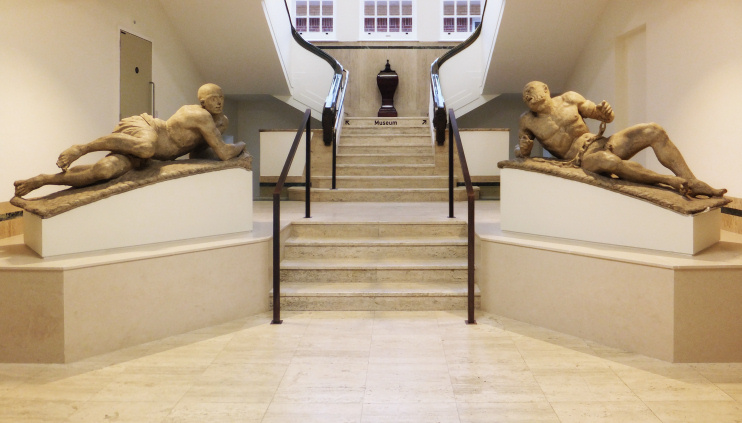
The museum possesses a magnificent collection of material relating to mental illness and the history of the Hospital of St Mary Bethlehem and its successors. However, only a limited selection can be displayed at any one time. Its most prized possessions are the statues Melancholy and Raving Madness (shown below), by Caius Gabriel Cibber (see also the statue of Charles II), which were originally mounted on either side of the gateway to the Moorfields hopsital.
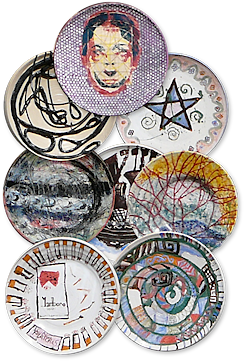
The gallery contains a little miscellany of art, mostly the work of the hospital’s residents and ex-residents. Exhibitions and events are programmed throughout the year. The paintings and drawings on display range from the whimsical to the disconcerting and sometimes downright distressing. On a lighter note, there are Bedlam-branded souvenir items for sale – mugs, pencils and the like.